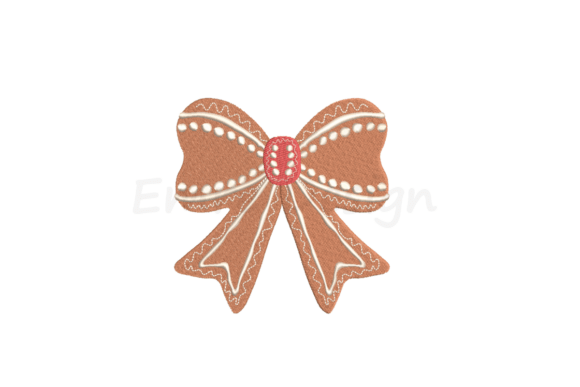
Coquette Gingerbread Girl Embroidery
First Impression: Whimsical, Festive, and Instantly Recognizable
As an embroidery designer who’s prepped over 200 craft fair booths—from snowy Vermont markets to sun-drenched California pop-ups—I know what stops a shopper mid-aisle. The Coquette Gingerbread Girl Embroidery lands with charm and clarity: it’s festive without being cliché, playful without tipping into kitsch, and undeniably Christmas—yet feels fresh enough for early December through New Year’s Eve. “Coquette” hints at soft elegance; “Gingerbread Girl” delivers warmth and nostalgia. Together, they suggest a design that balances personality and polish—a rare win for handmade product lines.
Where It Shines: Craft Fair Product Pairings That Sell
This machine embroidery design isn’t just versatile—it’s strategic. On a tote bag design, the Coquette Gingerbread Girl Embroidery works best centered on the front panel (8–10" wide), where her silhouette reads clearly from six feet away. Paired with natural canvas or oatmeal linen, it reads as boutique-worthy—not seasonal clutter. As apron embroidery, she shines above the pocket: small enough to avoid overwhelming the bib, bold enough to anchor the whole piece.
Tea towel embroidery is where this design truly sings. Cotton flour-sack towels provide ideal fabric texture—smooth enough for crisp stitch definition, absorbent enough to soften edges just right. Her whimsical pose (curtsying? twirling?) adds movement against a static kitchen backdrop. And unlike dense snowflake motifs, the Coquette Gingerbread Girl Embroidery avoids heavy stitch density in key areas—making it faster to run and less prone to puckering on lightweight weaves.
For embroidered patches, size matters: scale her to 3.5" tall for iron-on versatility. She holds up beautifully at that size—no tiny details vanish, no limbs blur. As a small shop product, these patches double as gift tags, ornament backings, or even collar accents on handmade pet bandanas. On curved surfaces like caps, test placement first—the skirt and bow respond well to gentle contouring if hoop size allows moderate curvature (standard 4x4" works with light stabilizer).
What Holds It Back: Practical Care Notes for Real Production
Don’t skip the test run. This digital embroidery file includes delicate elements—especially the lace trim on her apron and the fine icing swirls—that demand attention. On textured towels or thick denim, those details can mute. Use a medium-weight cutaway stabilizer under high-detail zones, and always check thread contrast: pale mint or rose gold thread lifts her sweetness without washing out on cream or charcoal fabrics.
Avoid scaling below 2.75". At smaller sizes, the facial features and bonnet ribbon lose legibility—critical for printable mockups or Etsy listings where thumbnail clarity drives clicks. Also note: dark fabric requires brighter top threads and possibly an additional layer of tear-away stabilizer underneath to prevent shadowing. And while the design reads beautifully on flat panels, avoid placing her directly over seams or darts—she needs clean, taut fabric to land with precision.
Booth Impact & Buyer Engagement: Why It Converts
In a sea of red-and-green Santas and glittery trees, the Coquette Gingerbread Girl Embroidery stands out by feeling *human*. She’s not shouting “Christmas!”—she’s whispering “handmade joy.” That subtlety builds trust with discerning buyers: Etsy sellers report higher cart completion when designs feel intentional, not algorithm-chasing. At craft fairs, I’ve watched customers pause, smile, then pick up the matching tea towel *and* embroidered pouch—her consistency across formats reinforces brand cohesion, even if you’re a solo maker.
She also photographs exceptionally well. Natural light flatters her curves and soft shading; no harsh shadows obscure her charm. That means your Etsy seller listings gain authenticity fast—no need for overstyled flat lays. Just one real mockup (e.g., her stitched on a folded linen pillow cover beside cinnamon sticks) tells the full story: cozy, crafted, considered.
Production Reality Check: Batch-Friendly but Not Blind-Friendly
This embroidery file is batch-production ready—if you plan ahead. Its balanced stitch density keeps run times predictable (no 45-minute single motifs stalling your queue). But don’t assume uniformity across substrates. Test on scrap fabric *before* hooping your first market bag. Compare how she behaves on cotton duck vs. brushed poly-cotton—subtle differences in tension and feed affect her bow symmetry and skirt flare.
Confirm hoop size compatibility early. Most versions fit comfortably in a 5x7", but verify before loading dozens of files. And always inspect spacing between elements: does her hand clear the edge of the hoop? Does the gingerbread detail sit cleanly above the baseline? These micro-checks prevent costly re-hooping mid-fair day.
Final Designer Notes Before You Launch
- Test the design on scrap fabric—especially with your most common base materials (towels, canvas, twill).
- Check thread contrast across three fabric colors: cream, charcoal, and rust-red.
- Review spacing and alignment in your embroidery software—don’t rely solely on preview thumbnails.
- Confirm hoop size matches your machine’s standard setup (no last-minute adapter hunts).
- Inspect stitch density in high-detail zones—adjust underlay if needed for stability.
- Use the right stabilizer: cutaway for knits and stretchy fabrics, tear-away for stable wovens.
- Create at least one real mockup—not digital. See how light hits her icing, how her pose reads in motion.
- Compare fabric colors side-by-side: some creams yellow under booth lighting; others mute thread vibrancy.
- Confirm commercial licensing before selling finished products—this is non-negotiable for any commercial embroidery use.
The Coquette Gingerbread Girl Embroidery isn’t just another holiday motif—it’s a quiet confidence-builder for makers. It says “I care about detail,” “I understand my customer’s taste,” and “This is worth the extra stitch.” In a crowded craft fair landscape, that’s not just charm. It’s conversion.