Funny Halloween Cute Skeleton Embroidery
First Impression: Sweet, Simple, and Surprisingly Versatile
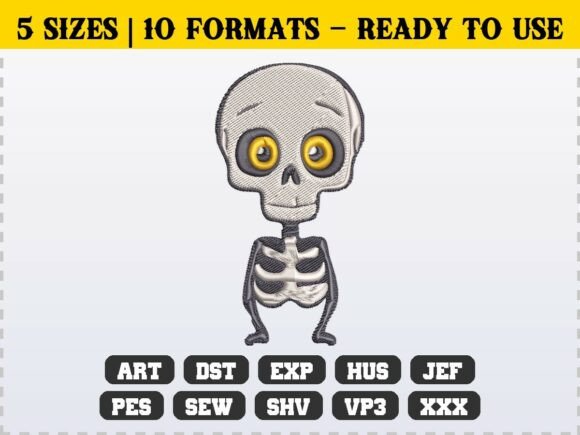
When I opened the Funny Halloween Cute Skeleton Embroidery file, I wasn’t expecting to smile—but I did. This isn’t a spooky or edgy skeleton; it’s a soft-spoken character with oversized, round eyes and clean, open outlines that read instantly at small sizes. The shape is intentionally uncluttered—no fussy bones, no jagged edges—just a friendly, slightly lopsided grin and gentle curves that suggest warmth, not whimsy for its own sake. That matters. In embroidery, simplicity isn’t lazy—it’s strategic. It means fewer stitch jumps, smoother satin stitch transitions, and better legibility on textured or curved surfaces.
A Real Project Test: Embroidering It on a Linen Tea Towel
Last week, I stitched the Funny Halloween Cute Skeleton Embroidery onto a natural linen tea towel for a local boutique’s holiday collection. Why linen? Because it’s unforgiving—loose weave, low stretch, and zero tolerance for dense fill stitches or poorly balanced tension. The design held up beautifully. Its moderate stitch density avoided puckering, and the expressive eyes stayed crisp without needing tiny backstitches or underlay tricks. Customers loved how approachable it felt—not “Halloween costume,” but “the skeleton who brings cookies.” That emotional resonance translates directly into perceived value: handmade product buyers don’t just buy a design, they buy the feeling it carries. And this one feels like a hug in bone form.
Where It Shines (and Where to Pause)
The Funny Halloween Cute Skeleton Embroidery excels on mid-weight fabrics where clarity and charm matter most:
- Custom apparel: Works cleanly on cotton sweatshirts and crewneck tees—especially when placed on left chest or sleeve. Its compact silhouette avoids overwhelming the garment.
- Baby embroidery: Gentle enough for onesies and burp cloths. No sharp angles or tiny details that snag or irritate delicate skin.
- Embroidered patch: Holds shape well when cut and fused—ideal for iron-on applications on denim jackets or backpacks.
- Tote bag design: Reads clearly even at 3.5" wide—perfect for canvas or heavy cotton bags sold at craft fairs or Etsy shops.
- Holiday embroidery for gifting: Pairs effortlessly with neutral thread palettes (cream, charcoal, rust) for personalized gifts that feel curated, not seasonal cliché.
But be thoughtful about placement and substrate:
- Avoid dense knit fabrics unless you use cutaway + tear-away stabilizer combo—the design’s open areas can distort on stretchy fabric.
- Test on dark fabric first: those big eyes rely on contrast. If stitching in light thread on black terry cloth, consider adding a white underlay layer (if your machine supports it).
- Don’t force it into a 3" hoop without checking actual dimensions—some versions of this design sit comfortably at 4", and crowding compromises satin stitch flow.
- Curved surfaces like caps require re-hooping or digitized cap-optimized versions—this file appears optimized for flat goods, not structured headwear.
Design Judgment: How It Builds Trust and Value
As an embroidery designer who also sells digital embroidery files, I pay close attention to how a design reads *after* stitching—not just in the software preview. The Funny Halloween Cute Skeleton Embroidery earns trust because it delivers what it promises: a cohesive, friendly character that doesn’t fall apart at the edges. That consistency builds brand credibility for small shop owners and Etsy sellers. When customers see that same warm expression across tote bags, pillow covers, and baby blankets, it signals intention—not randomness. It also encourages repeat engagement: people remember the skeleton who waves, not the one who glares.
For creative entrepreneurs, this design functions as reliable design assets—not filler. It scales well for printable mockups (try it on a cream apron or oatmeal-colored pillow cover), and its lack of fine linework makes it forgiving for beginners while still satisfying experienced stitchers who appreciate smart digitizing.
Practical Designer Notes Before You Stitch
Before using the Funny Halloween Cute Skeleton Embroidery in client work, production runs, or commercial embroidery projects, run these checks:
- Always test on scrap fabric—especially if pairing with textured weaves or blends.
- Review thread colors against your base fabric in natural light. What looks cheerful on screen may mute on oatmeal linen.
- Confirm hoop size compatibility. If your smallest hoop is 4", and the design measures 3.8" wide, you’re golden. If it’s 4.2", adjust or reposition.
- Inspect small details: those eyes should be fully filled with smooth satin stitch—not ragged or skipped. Zoom in on your embroidery software.
- Try a black-and-white mockup to assess contrast balance—critical for gift items where color accuracy matters less than readability.
- Use appropriate stabilizer: medium-weight cutaway for knits, lightweight tear-away for stable wovens like quilting cotton or linen.
- Verify licensing before selling finished products or bundling the file in digital embroidery kits. The description says “all treat and no trick”—but always confirm terms directly with the source.
Final Thought: A Design That Feels Like a Choice, Not a Trend
In a market flooded with over-digitized Halloween motifs—bats with 17 layers, pumpkins dripping metallic thread—the Funny Halloween Cute Skeleton Embroidery stands out by doing less, thoughtfully. It doesn’t shout. It invites. That makes it unusually effective for handmade product lines where authenticity and quiet charm sell better than flash. Whether you’re embroidering a single personalized gift or building a boutique’s seasonal collection, this design works because it respects both the craft and the customer. It’s not just embroidery—it’s storytelling, stitched.