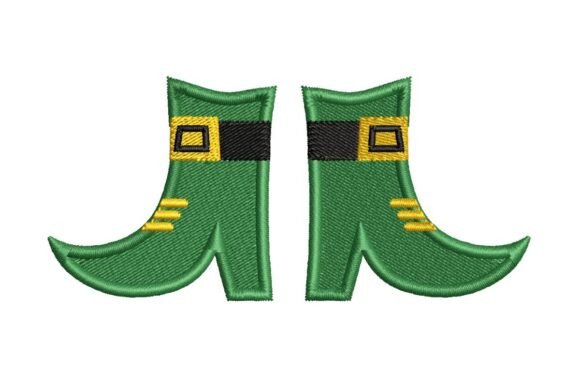
Leprechaun Shoes Embroidery Design
A Festive First Impression: Whimsy, Charm, and Instant Seasonal Recognition
As an embroidery designer who’s curated over 200 seasonal collections for small shops and Etsy sellers, my first glance at the Leprechaun Shoes Embroidery Design stops me mid-scroll—not because it’s flashy, but because it’s *instantly legible*. On a clean white background, those green boots with playfully curled toes, crisp black bands, and gleaming golden buckles radiate pure St Patrick S Day spirit: joyful, lighthearted, and unmistakably Irish. It’s not overly detailed or fussy—no tiny shamrocks crowding the frame or ornate lacework that risks stitching failure. Instead, it strikes a rare balance: decorative enough to feel special, simple enough to scale beautifully across product types. The mood is playful and cozy—not elegant or spiritual, but warmly nostalgic, like childhood parades and family baking soda bread. That emotional resonance is gold for holiday embroidery.
Where This Design Shines in Real Holiday Product Strategy
When building limited-edition collections for March, I ask: “Does this design make a *product*—not just a stitch?” The Leprechaun Shoes Embroidery Design absolutely does. On medium-weight cotton sweatshirts, it reads clearly at 3.5”–4.5”, anchoring a family matching set without overwhelming the garment. As a tote bag design, it lands perfectly centered on natural canvas—festive but not kitschy, ideal for farmers’ market vendors or boutique gift shops. For kitchen towel embroidery, its bold silhouette holds up against frequent washing and fabric texture, especially when paired with coordinating green or gold thread. It also works beautifully as a pillow cover accent (centered on linen or cotton duck) and as a standalone embroidered patch for jackets or backpacks—adding instant personality to handmade gifts.
For Etsy sellers, this design boosts visibility: pairing it with keywords like “St Patrick S Day handmade gift” or “personalized gift for kids” taps into high-intent seasonal search. On craft fair tables, it stands out in mockups—especially when shown on aprons, table linens, or baby onesies (with gentle sizing adjustments). Social media previews thrive with this motif: a flat-lay of three embroidered items—a mug cozy, a mini pillow, and a tote—creates visual rhythm and encourages gift bundles. And because it’s clean-lined and high-contrast, it translates effortlessly into printable mockups and promotional graphics—no pixelation, no detail loss.
Smart Placement & Where to Proceed With Care
Not every surface welcomes whimsy equally—and that’s where experience matters. Avoid using the Leprechaun Shoes Embroidery Design on curved caps or stretchy knit garments unless you’ve tested stabilizer layers thoroughly; the curled toe detail can distort on high-give fabrics. Similarly, while it scales well down to ~2.75”, don’t push it smaller—tiny buckles lose definition, and thread density may cause puckering on lightweight cotton. Thick terry cloth towels? Possible—but only with cutaway stabilizer and adjusted tension. Dark fabric? Yes—but test your thread colors first: rich forest green and warm antique gold pop best, while neon greens risk looking cheap next to traditional St Patrick S Day palettes.
Metallic thread? Use sparingly—only for the buckle highlights, not the entire shoe. Overuse invites breakage and inconsistent sheen. And always confirm commercial licensing before selling finished products: if you’re an Etsy seller or small shop owner, verify whether your digital embroidery file purchase includes rights for resale. When in doubt, reach out to the designer or marketplace—never assume.
Why This Design Builds Trust, Value, and Repeat Holiday Sales
Holiday shoppers don’t just buy motifs—they buy feeling, reliability, and ease. The Leprechaun Shoes Embroidery Design delivers all three. Its clarity builds customer trust: buyers instantly recognize the theme, reducing hesitation at checkout. Its versatility supports perceived value—customers see how it elevates everything from a $22 kitchen towel to a $68 linen pillow cover. And because it’s rooted in tradition yet feels fresh (no leprechaun faces or clichéd rainbows), it avoids seasonal fatigue—making it perfect for multi-year collections.
For brand consistency, pair it with a tight color palette: deep emerald, charcoal black, warm gold, and creamy off-white. That cohesion strengthens recognition across your shop—from Instagram stories to printed tags. Most importantly, it sparks engagement: customers tag friends (“This is SO you!”), share photos of matching sibling sets, and return each March expecting new variations. That loyalty isn’t accidental—it’s built on designs like this one, chosen not just for charm, but for real-world performance.
Practical Designer Notes Before You Stitch
- Always test stitch on both light and dark fabric—thread behavior changes dramatically with substrate.
- Check stitch density: if the file feels heavy in the toe curl or buckle area, reduce density slightly to prevent stiffness on apparel.
- Confirm hoop size compatibility—this design should comfortably fit standard 4x4 and 5x7 hoops, but verify before digitizing for production.
- Match stabilizer to end use: tear-away for stable cottons, cutaway for knits or towels, and lightweight fusible for delicate linens.
- Create realistic mockups—not just on white backgrounds, but on actual product photos with natural lighting and shadows.
- Review small details post-stitch: ensure the golden buckle maintains crisp edges and the black bands don’t bleed into green threads.
- Plan coordinated thread colors across your collection—consistency reinforces your shop’s seasonal identity.
- Before listing any finished product, double-check commercial embroidery rights—this protects your small business and honors the original designer’s work.