Minimal Daisy Embroidery Design File
A Quiet Bloom That Actually Works on Real Fabric
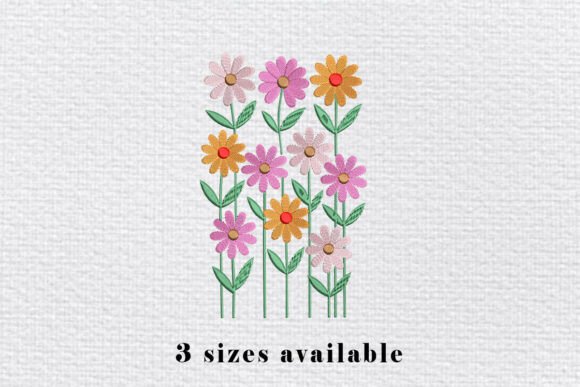
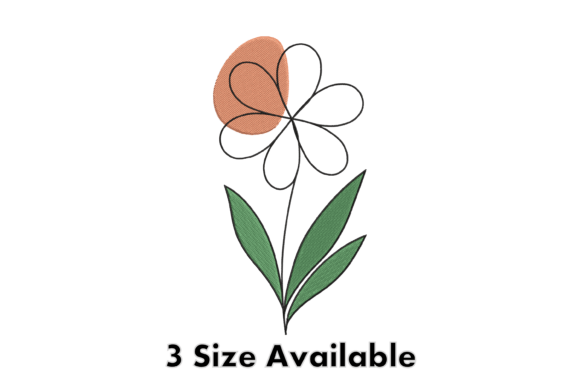
Let’s be honest: “minimal” in embroidery often means “barely legible after stitching.” But the Minimal Daisy Embroidery Design File surprised me—not with flash, but with quiet confidence. I pulled it up on my machine software and immediately noticed what wasn’t there: no fussy stems, no overworked petals, no filler stitches pretending to add depth. Just five soft, slightly asymmetrical petals radiating from a compact center, anchored by a single clean stem line. It feels like something you’d sketch in a notebook before coffee—light, intentional, unhurried. That simplicity isn’t lazy; it’s calibrated. And that makes all the difference when you’re stitching for real people who’ll wear, wash, and live with your work.
Where It Shines: Tote Bags, Baby Onesies, and That First-Ever Apron
I tested the Minimal Daisy Embroidery Design File on three very different projects: a natural canvas tote for a local bakery, a cotton onesie for a newborn client, and a linen apron for a ceramicist friend. On the tote? Perfect. The daisy sat cleanly above the pocket—no puckering, no thread nesting—because the stitch density stays low and even. On the onesie? It held up beautifully on lightweight knit with tear-away + cut-away stabilizer combo. The small scale (I used the smallest of the three included sizes) read clearly without looking fragile. And on the apron? That single stem line gave just enough vertical rhythm to balance her hand-thrown pottery logo—no competition, just gentle harmony.
This is where the Minimal Daisy Embroidery Design File earns its keep: in handmade products that need breathing room. It doesn’t shout. It invites. A customer scrolling Etsy sees it on a sweatshirt and thinks, “That’s *me*—not too sweet, not too stark.” It fits seamlessly into a boutique’s seasonal edit or a craft fair table next to hand-dyed towels and ceramic mugs. As a digital embroidery file, it’s a quiet workhorse—not a showstopper, but the kind of design you reach for again and again because it simply *works*.
Where to Pause—and Why
Don’t rush this one onto dark, textured fabric without testing. The open petal structure relies on contrast. On charcoal terry cloth or heavy twill, the center can visually disappear unless you boost thread saturation or add a subtle underlay. Likewise, avoid tight curves—like the front brim of a structured cap—without adjusting placement or trimming the stem. The design assumes a flat, stable surface, so curved or layered garments need extra hooping care.
Also: skip dense applique layers directly beneath it. That delicate outer petal edge won’t hold crispness if buried under thick fusible or multiple fabric layers. And while it’s lovely on baby clothes, double-check stitch count if you’re embroidering on pre-washed organic cotton—some ultra-soft weaves shift more than expected, especially around the outermost running-stitch petal edges.
What It Does for Your Craft Business
- Builds trust: Customers recognize restraint as skill. A clean daisy says “I know what matters”—and they’ll pay more for that quiet professionalism.
- Speeds up production: Low stitch density = faster runs, less thread breaks, fewer restarts. For an Etsy seller doing 10–15 custom orders/week, that adds up to real time saved.
- Plays well with branding: It’s neutral enough to pair with serif monograms or modern sans-serif tags—no visual clash, no forced cohesion.
- Photographs honestly: No mockup tricks needed. It looks as good in natural light on Instagram as it does stitched on your sample board.
Designer Notes You’ll Actually Use
Before you load the Minimal Daisy Embroidery Design File into your machine:
- Test on scrap fabric *exactly* like your final project—same weave, same stretch, same pre-wash status.
- Check thread color contrast in both black-and-white and full-color mockups. What reads softly in RGB may vanish on navy.
- Review stitch density in your software. If it’s higher than 12,000 stitches, consider reducing density slightly—especially for baby items or thin cotton.
- Confirm hoop size compatibility. The three included sizes suggest flexibility, but verify which fits your standard hoops before batching orders.
- Inspect small details at 200% zoom: look for stray jump stitches near the stem base or inconsistent satin stitch angles in the center.
- Use appropriate stabilizer—light cut-away for knits, tear-away for stable wovens, and avoid heat-away unless you’ve confirmed it doesn’t distort the petal shape.
- Verify licensing terms before selling finished products or bundling the file with other digital embroidery files. “Commercial use” isn’t always implied—even for simple designs.
Final Thought: Less Isn’t Just Minimal—It’s Measured
The Minimal Daisy Embroidery Design File doesn’t try to be everything. It’s not a bouquet. It’s not a monogram. It’s one daisy—quiet, clear, and confidently scaled. That makes it unusually versatile: equally at home on a holiday tea towel, a wedding guest book cover, or a small-batch capsule collection for a sustainable apparel brand. In a market flooded with busy, over-digitized florals, this design stands out by stepping back. It reminds us that in embroidery—as in good design—the most powerful statement is often the one made with space, restraint, and respect for the fabric beneath the needle.