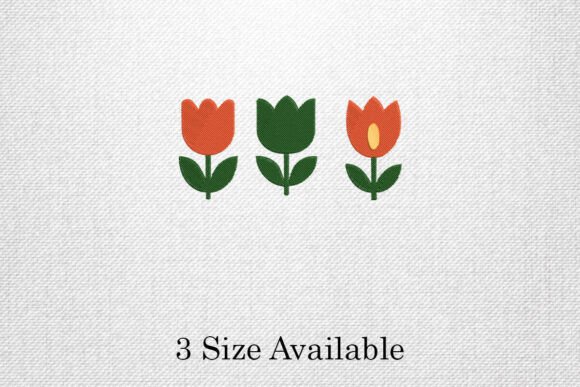
Minimal Tulip Flower Embroidery Set
A Designer’s Real-World Review for Boutique Sweatshirt Projects
As an embroidery designer who’s developed over 200+ commercial embroidery files for small clothing brands and Etsy sellers, I approached the Minimal Tulip Flower Embroidery Set with a very specific question: *Does this design hold its own on premium sweatshirts—not just as decoration, but as brand expression?*
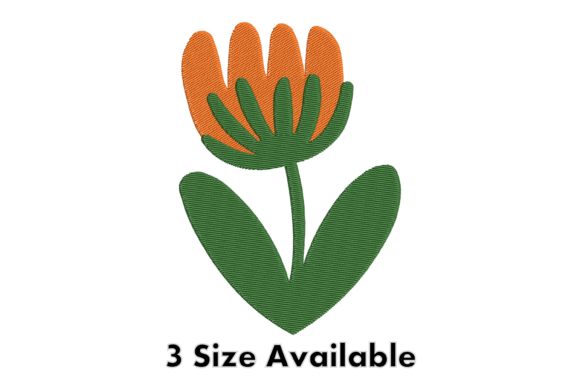
The answer is yes—but with thoughtful execution. This isn’t a fussy botanical illustration or a dense filler motif. It’s a distilled, confident gesture: one tulip, clean lines, intentional negative space, and balanced proportions. The mood is quietly confident—neither overly dainty nor starkly industrial. It reads as modern, calm, and intentionally uncluttered. That’s rare in single-flower embroidery sets, where many default to either ornate realism or oversimplified silhouettes.
How It Lives on Real Sweatshirt Fabric
On neutral heather grey or oatmeal sweatshirts, the Minimal Tulip Flower Embroidery Set becomes a subtle signature—elegant without shouting. It works especially well on chest placement: centered just below the collarbone or offset slightly left for asymmetry. On oversized hoodies, it gains quiet authority—small enough to avoid visual weight, yet distinct enough to anchor the front panel.
Dark fabric? Absolutely viable—if you choose high-contrast thread colors. A matte charcoal tulip on black French terry reads rich and tactile; a creamy ecru on navy feels like a breath of spring. Pastel sweatshirts (think blush, sage, or sky blue) let the design shine with soft harmony—ideal for seasonal drops tied to renewal or gentle confidence.
For sleeve accents or back-of-neck placements, the scale holds up beautifully. Unlike busier floral motifs, this tulip doesn’t compete with ribbing, seams, or garment drape. Its linearity follows the natural curve of the shoulder or the clean edge of a hoodie cuff.
What Makes It Boutique-Ready
This isn’t just “cute” or “beginner-friendly”—it’s brand-flexible. A small shop selling slow-made apparel can use it to signal intentionality. An Etsy seller building a cohesive capsule collection can repeat it across sweatshirts, tote bags, and baby onesies without visual fatigue. It supports lifestyle product photography effortlessly: the clean shape photographs crisply against linen backdrops, textured wood, or minimalist studio lighting.
In mockup previews and digital listings, the Minimal Tulip Flower Embroidery Set translates clearly at thumbnail size—no lost detail, no pixelated edges. That’s critical for Etsy sellers scrolling through mobile feeds. As a digital embroidery file, it performs like a trusted design asset: predictable, scalable, and consistent across stitch-outs.
Practical Design Considerations for Commercial Use
Thread color contrast is your first lever. Since the design leans minimal, avoid muddy mid-tones. Opt for crisp pairings: deep olive on cream, slate grey on ivory, or warm terracotta on oat. For dark fabrics, go matte—not shiny—thread to preserve that understated luxury.
Stitch density feels intentionally moderate—not so light it fades on thick fleece, not so heavy it stiffens the knit. That balance makes stabilizer choice forgiving: medium-weight cutaway works reliably for most sweatshirt weights, while tear-away suffices for lighter French terry or cotton-blend hoodies. Just avoid ultra-lightweight stabilizers—they won’t support the clean satin-stitched petals under tension.
Hoop size? Likely fits comfortably in a 4x4 hoop, but always verify before bulk production. Small-size readability is excellent—even at 2.5 inches tall, the stem, cup, and subtle petal curve remain legible. No tiny interior details that vanish when stitched at scale.
Washing durability? Based on layout and stitch logic, yes—this isn’t a high-float, high-density file prone to snagging. The outlines are smooth, transitions are gradual, and there’s no excessive underlay stacking. That means fewer reworks, fewer customer complaints about fraying after home laundering.
Why It Strengthens Your Handmade Product Story
In today’s market, buyers don’t just buy sweatshirts—they buy trust, cohesion, and care. The Minimal Tulip Flower Embroidery Set reinforces all three. Its simplicity signals confidence in craftsmanship, not cost-cutting. When repeated across a small shop product line, it builds visual recognition faster than abstract shapes or text-based logos.
For handmade presentation, it avoids looking “designed by algorithm.” There’s warmth in the slight organic variation implied by hand-guided curves—even in machine embroidery, this tulip feels considered, not generated. That nuance matters to customers scrolling past mass-produced alternatives.
Who Should Reach for This Design—And Who Might Pause
This machine embroidery design shines for:
- Etsy sellers launching a spring-themed capsule or gender-neutral loungewear line
- Boutique brands prioritizing quiet luxury over trend-chasing
- Apparel decorators adding subtle custom embroidery to blank-sweatshirt inventory
- Crafters wanting to elevate baby items or nursery textiles with refined botanicals
- Digital sellers bundling design assets for fellow creatives (pair it with coordinating stems or single leaves)
It’s less ideal if you need bold statement embroidery, intricate shading, or tight clusters of flowers. Remember: this lives in the Single Flowers category—and excels precisely because it doesn’t try to be more than one thoughtfully rendered bloom.
Final Thoughts Before You Stitch
The Minimal Tulip Flower Embroidery Set earns its place in a professional embroidery workflow—not as filler, but as foundation. It’s the kind of embroidery file that makes sweatshirt embroidery feel intentional, not additive. It supports your voice as a creator: calm, capable, and deeply attuned to how people experience texture, line, and quiet beauty in everyday wear.
If you’re curating design assets for a boutique brand—or building your first line of custom apparel—this tulip isn’t just stitching. It’s a quiet promise: that simplicity, when executed with care, carries weight.
Before production, always confirm hoop size compatibility, test stitch density on your exact fabric blend, and review thread color options against physical swatches—not just screen previews. And remember: even the most minimal embroidery design gains power from context, consistency, and craft.